

Long Beach’s Harvest Table Before Thanksgiving
Written by Guna Pandian, Communications Student Assistant
Before the highways, before the neighborhoods, before Long Beach became a city of familiar streets and oceanfront homes, there was a different world here.
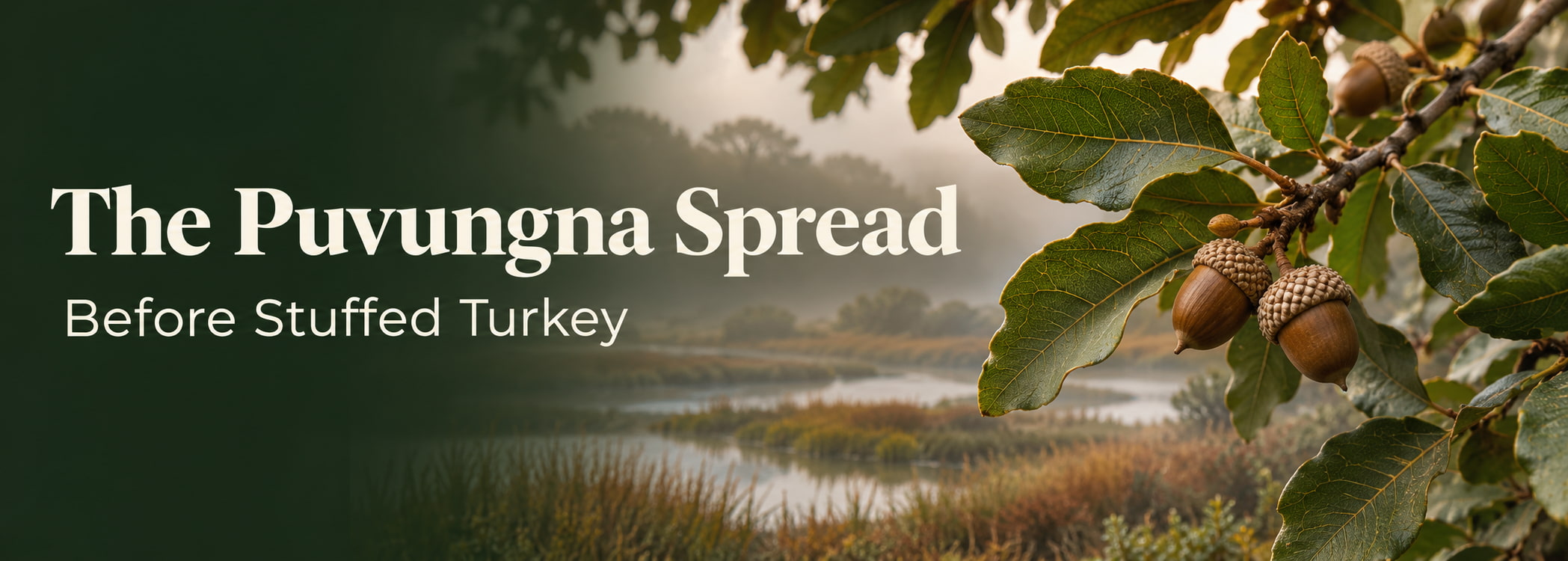
Imagine the coastline centuries ago. Morning fog slowly lifts over the Pacific. Water moves through coastal wetlands, birds pass through the marshes and oak branches hang heavy with acorns. The air carries the scent of saltwater, native grass and damp earth. Generations of people called this landscape home.
This was part of Tovaangar, the ancestral homeland of the Tongva people. For thousands of years before Spanish colonization, Indigenous communities across the Los Angeles Basin and nearby islands lived by the rhythms of the seasons: the movement of fish, the flowering of native plants and the annual harvest of acorns.
Within this landscape was Puvungna, a sacred site on what is now the western edge of the California State University, Long Beach campus, near Rancho Los Alamitos. Puvungna was a gathering place within a network of villages whose residents traveled to exchange goods, knowledge and stories. It remains a place of deep cultural and spiritual significance. In Tongva traditions, Puvungna is associated with creation and the teachings of Chinigchinich.
Today, a November spread might bring to mind roasted turkey, stuffing and pumpkin pie. But what might a seasonal harvest have looked like centuries ago, here along the coast of present-day Long Beach?
What Was on the Table?
Shawii (Acorn Porridge)
Before mashed potatoes became a familiar holiday staple, acorns were an essential source of nourishment throughout Tovaangar. In the fall, people gathered acorns (wi’aaw) from coast live oaks, cracked and ground them, then rinsed the meal with fresh water to remove the bitter tannins. The meal was cooked into shawii, a warm, earthy porridge.
Bounty from the Estuaries and Sea
In plank canoes called ti’at, Tongva fishers traveled along the coast to catch sea bass, halibut and sardines. Clams and mussels could be gathered along the shore, and coastal waters also provided abalone (’epu).
Toasted Chia and Native Greens
Long before chia seeds became a health-food trend, golden and black chia (pashii) were part of the traditional diet. The seeds were roasted and ground into pinole or mixed with water to make a drink. People also gathered seasonal greens such as miner’s lettuce and wild onions.
Elderberries, Toyon and Native Herbs
A holiday table today might get its tart sweetness from cranberry sauce. Here, people gathered native fruits such as elderberries, which they dried for later use, and the bright red berries of toyon. White sage and wild mugwort were also part of a broader knowledge of local plants and their uses.
Together, these ingredients tell a story of a harvest shaped by the seasons and by knowledge passed down through generations. Before Long Beach became a city, before its streets had names, and before Thanksgiving became a familiar tradition, the land and waters around Puvungna already sustained communities. That story deserves a place at the table.
Sources & Further Reading
- California State University, Long Beach. Puvungna – Indigenous History and Cultural Significance.
- California State University, Long Beach. Master Plan Update – Tribal Cultural Resources (2023).
- Rancho Los Cerritos Historic Site. First Inhabitants – Tongva History and Traditional Foodways.
- Friends of Puvungna. History of Puvungna – Sacred Site and Tongva Heritage.
- City of Long Beach. Cultural Resources – New Civic Center Project.
- Ballona Discovery Park. The Tongva: A People of Land and Sea.
- U.S. Advisory Council on Historic Preservation. Long Beach VA Cultural Resources Memorandum of Agreement.